CogniMary: what the label actually publishes
A full Supplement Facts panel, four quantified nutrients — and eleven more ingredients sharing one 635 mg number.
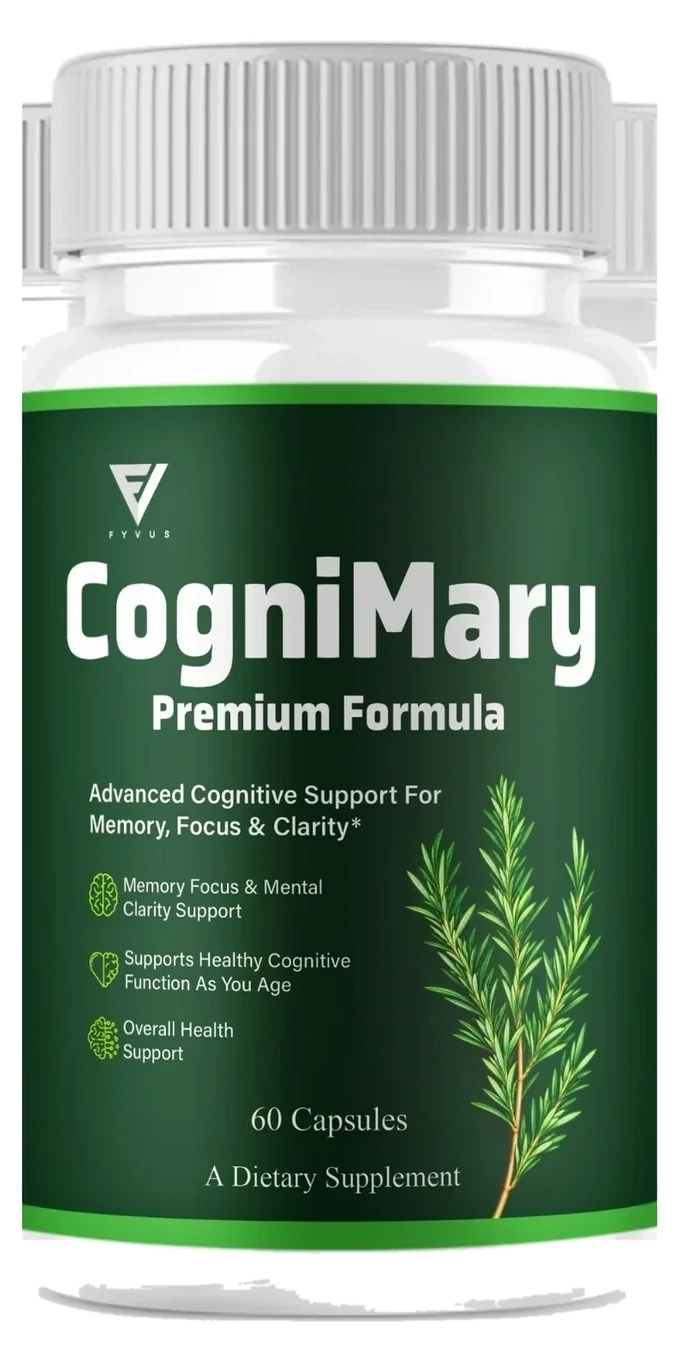
Two capsules a day, 60 to a bottle, 30 days. The panel quantifies folate, vitamin B12, magnesium and chromium. Eleven more ingredients share one 635 mg blend whose split is not published.
Blend ingredients must be listed heaviest first, so a ceiling can still be worked out for each. Six of the eleven cannot reach their researched dose.
Every one of those is read off the printed panel. The fourth is the one this site is about.
No price, and no guarantee length, was published to this site. Both are on the checkout page. Here is what we do know.
- A real Supplement Facts panel, transcribed in full
- Four nutrients quantified; eleven not
- Every dose claim carries its citation
- No reviews published as verified
CogniMary at a glance: form, dose, blend and terms
Everything a buyer checks first, in one table. Four rows say “not published”, and one of them is the one this whole site is about.
| What | CogniMary |
|---|---|
| Product class | Dietary supplement, cognitive support |
| Form | Capsules |
| Count | 60 capsules a bottle |
| Serving size | 2 capsules |
| Servings per container | 30 |
| Days per bottle | 30 — the first thing on this label that can be worked out with certainty |
| Nutrients quantified | 4 — folate, vitamin B12, magnesium, chromium |
| Ingredients not quantified | 11, sharing one 635 mg blend |
| Label claim | Advanced Cognitive Support For Memory, Focus & Clarity* |
| Price | Not published — set at checkout |
| Guarantee | Term not published as a number |
| Ships from | The United States |
| Who it is for | Adults 18 and over. Not for use if pregnant or nursing |
| Verified reviews | None published |
| Lot reference | COG-26/GO-2760 — a reference, not a test result |
| Distributed by | Amplify Distribution, LLC, Scottsdale, Arizona |
| Order desk | +1 (302) 200-3480 |
Two things separate this label from most of its category. It publishes a real Supplement Facts panel, which is more than many competitors manage. And it puts eleven of its fifteen named ingredients inside a single number.
The 635 mg question
Eleven ingredients share one number. Federal labelling rules let the seller hide the split — and, in the same regulation, hand us a way to put a ceiling on every one of them.
Federal labelling rules let a proprietary blend publish one total and hide the split. The same rules require the ingredients to be listed in descending order of weight. That second rule is the crack in the first one: if eleven weights fall from heaviest to lightest and add up to 635 mg, the ingredient in position k cannot weigh more than 635 ÷ k milligrams. Those ceilings are below, with the lowest dose each ingredient was actually studied at — the reading most favourable to the product.
Six of the eleven cannot reach a researched dose, and the arithmetic does not depend on trusting anyone. Berberine sits sixth, so it cannot exceed 105.8 mg; its usual trial schedule is 1,500 mg a day. Alpha lipoic acid sits eighth, ceiling 79.4 mg, against a 600 mg trial dose. GPC choline sits ninth, ceiling 70.6 mg, against 600 mg.
Two of them fit easily: lutein and zeaxanthin were studied at 10 mg and 2 mg. Ginkgo, in second place, has room for its 120–240 mg. Green tea has no cognition dose we could verify, so it gets no verdict.
Add up the lowest researched dose of every ingredient that has one and you get 4,492 mg. The blend is 635 mg. It would need to be about seven times larger — and this page still does not claim to know the split, because nobody outside the factory does.
Nothing on that chart is an opinion, and nothing on it claims to know what is in the capsule. It is the printed total, the printed order, and division. The full working, including what happens if the blend were bigger, is on the 635 mg ceiling page.
What the panel actually prints
Transcribed from the bottle artwork, including the misspelling.
Supplement Facts
Serving Size: 2 Capsules
Servings Per Container: 30
Cinnamon (Cinnamomum spp. bark) Extract, Ginkgo Biloba (leaf) Extract, Bilberry (Vaccinium cyanococcus fruit) Extract, Bacopa monnieri (whole plant) Extract [NLT 20% Bacosides], Green Tea (leaf) Extract [NLT 50% Epigallocatechin gallate], Berberine HCl, L-Theanine, Alpa Lipoic Acid (ALA), GPC Choline (α-Glycerophosphorylcholine), Lutein (Marigold flower Extract), Zeaxanthin (Marigold flower Extract)
‡ Daily Value not established
Other Ingredients: BSE-free gelatin (capsule), rice flour, silicon dioxide, magnesium stearate
Transcribed from the bottle artwork supplied to this website.
That is the whole panel. It is unusual in this category to be able to publish one, and it deserves credit before anything else on this site criticises it.
The four nutrients the panel does quantify
| Nutrient | Per serving | % Daily Value | The Daily Value | What to notice |
|---|---|---|---|---|
| Folate as 320µg folic acid | 600 µg DFE | 150% | 400 µg DFE | the only row on this panel whose arithmetic does not check out |
| Vitamin B12 as cyanocobalamin | 240 µg | 10,000% | 2.4 µg | one hundred times the Daily Value |
| Magnesium as magnesium oxide | 250 mg | 60% | 420 mg | the cheapest and least absorbable common magnesium salt |
| Chromium as chromium picolinate | 120 µg | 343% | 35 µg | roughly three and a half times the adequate intake |
Scroll this table sideways →
Three of those four percentages are unusual figures, and one of them does not divide correctly. The folate row prints 600 µg DFE from 320 µg of folic acid; the FDA's own conversion rule turns 320 µg of folic acid into 544 µg DFE. We do not know which number is the typo, so we publish both.
A high percentage is not a mechanism
Ten thousand percent of the Daily Value of vitamin B12 is a statement about a reference figure of 2.4 µg, not about an effect. The systematic reviews of B12 and cognition in people who are not deficient find no benefit, and they are cited on the ingredients page.
The eleven inside the blend
In the printed order, which is the order of weight. Each card carries the dose the ingredient was studied at and the most it can weigh here.
The evidence behind each one →How it is supposed to work →Cautions and interactions →
What this bottle can and cannot tell you
Those four figures are the whole story of this label. Two of them are creditable, one is arithmetic, and one is simple division.
CogniMary pros and cons
What this label does well
- A full Supplement Facts panel, which most of this category does not print
- A stated serving size and a servings-per-container count, so days per bottle can be worked out
- An Other Ingredients line, so allergen and capsule material are disclosed
- A named distributor with a street address and a phone number on the bottle
- Standardisation printed for two of the botanicals — bacosides not less than 20%, EGCG not less than 50%
- Warnings printed plainly, including the pregnancy and nursing instruction
What it does not
- Eleven ingredients share one 635 mg figure with no split disclosed
- Six of those eleven cannot reach the dose they were studied at
- Magnesium is supplied as the oxide, the least well absorbed of the common forms
- The folate row's DFE conversion does not match the folic acid figure beside it
- The bilberry entry gives a botanical name that belongs to blueberries
- No price and no guarantee length were published to this website
- The advert panels claim digestion, detox, immunity and stamina; the bottle does not
Our editorial score
A full Supplement Facts panel, a serving size, a servings-per-container count, an Other Ingredients line and a named distributor with an address. After two builds with no panel at all, this is a different class of label.
Four nutrients are quantified. Eleven ingredients share one 635 mg number. That is legal, and it is still the main thing a buyer cannot check.
Two capsules can physically carry 635 mg of blend. The question is not whether the capsule fits it — it is whether 635 mg divides eleven ways into anything a trial has tested.
Real literature exists for ginkgo, bacopa, theanine, GPC choline and the carotenoids. The largest ginkgo trial and the AREDS2 cognition arm both found nothing, and this site says so on the same page as the rest.
Berberine and cinnamon are metabolic ingredients with no human cognition evidence between them. Lutein and zeaxanthin are eye ingredients whose one large cognition trial was null.
Magnesium oxide is the cheapest common magnesium salt and the least well absorbed of the common ones. Folic acid rather than methylfolate is a defensible choice; magnesium oxide in a premium formula is a harder one.
No price was published to this site for any pack. Not one figure.
A named US office, a named returns address and a staffed order desk, against a guarantee whose length is never stated as a number.
Five of the eight supplied quotes are word for word identical. The site publishes the seller's figures as the seller's figures and shows the audit.
Nine rows. This product scores better than the last two labels we looked at on transparency and worse than either would on the gap between what it names and what it can carry.
How to take it
The label's instruction is one sentence: “Take 2 capsules daily (or as needed) or as directed by your health care provider.” There is no time of day, no with-or-without-food rule, and no guidance on what “as needed” means on a product whose panel is built around thirty daily servings.
Pick one time and keep it
The label does not specify one, so the decision is yours. A fixed cue beats a fixed hour: with breakfast, or when you make the first coffee.
Take it with food
The label does not say to, but 250 mg of magnesium oxide on an empty stomach is the most predictable way to have a bad morning with this product.
Count the bottle, not the days
Sixty capsules, two a day. If a bottle is lasting longer than a month you are not taking it as the panel assumes, and nothing on this label is measured any other way.
Give it the length the trials gave it
The ingredient on this label with the clearest meta-analysis needed twelve weeks of daily dosing before its effect appeared. Judging this at day five will tell you nothing.
CogniMary price and packs
No price was published to this website for any pack. Here is what we can tell you instead.
One bottle
60 capsules · 30 days
Price at checkout
No price was published to this website
- 60 capsules in the pack
- 30 days at the label serving
- Ships from the United States
- Guarantee term shown on the listing


Three bottles
180 capsules · 90 days
Price at checkout
No price was published to this website
- 180 capsules in the pack
- 90 days at the label serving
- Ships from the United States
- Guarantee term shown on the listing

Five bottles
300 capsules · 150 days
Price at checkout
No price was published to this website
- 300 capsules in the pack
- 150 days at the label serving
- Ships from the United States
- Guarantee term shown on the listing

Six bottles
360 capsules · 180 days
Price at checkout
No price was published to this website
- 360 capsules in the pack
- 180 days at the label serving
- Ships from the United States
- Guarantee term shown on the listing
No pack price was published to this website. Every card above reads “Price at checkout” because that is where the figure lives, and inventing one would be worse than leaving it blank. The day counts are ours, and they are simple division: 60 capsules, 2 a day, 30 days a bottle.
What the price will and will not include →What we know about the guarantee →
What do CogniMary reviews say?
The seller supplied a set of review figures with this build. We publish them as the seller's figures and audit them, because five of the eight supplied quotes are word for word identical and that is not what eight independent customers produce.
The distribution above is the seller's published one. No verified customer review appears anywhere on this site, and no review or rating schema is emitted on any page, so no star rating from this site will appear in a search result.
Common questions
What is CogniMary?
A dietary supplement in capsule form, sold in the United States by Gocognimary as an authorised CogniMary retailer. The bottle holds 60 capsules, the serving is 2 capsules, and the panel counts 30 servings to a bottle. The front of the label claims “Advanced Cognitive Support For Memory, Focus & Clarity”.
Does CogniMary publish a Supplement Facts panel?
Yes, and that puts it ahead of most of this category. The panel quantifies folate, vitamin B12, magnesium and chromium individually, then puts eleven more ingredients inside a single 635 mg proprietary blend without splitting it.
What is in the 635 mg blend?
Eleven ingredients, in this printed order: cinnamon extract, ginkgo biloba, bilberry, bacopa monnieri, green tea extract, berberine HCl, L-theanine, alpha lipoic acid, GPC choline, lutein and zeaxanthin. The order matters — federal labelling rules require descending order by weight, which is what lets this site work out a ceiling for each one.
How much of each blend ingredient is in a serving?
Not published, and the seller is not required to publish it. What can be worked out is an upper bound for each position in the list, and the 635 mg ceiling page does exactly that.
Why does the panel say 600 µg DFE from 320 µg of folic acid?
That is a good question and we do not know the answer. Under the FDA's conversion guidance, micrograms of dietary folate equivalent are 1.7 times the micrograms of folic acid, so 320 µg of folic acid is 544 µg DFE. The panel prints 600. We publish both numbers and the rule, and leave the discrepancy visible.
How do I take CogniMary?
The label says: take 2 capsules daily, or as needed, or as directed by your health care provider. That is the whole instruction. It does not specify a time of day or whether to take it with food.
What does “or as needed” mean on a daily supplement?
We do not know, and it is an odd phrase to find on a product whose panel is built around 30 daily servings. If you follow the 2-a-day instruction, a bottle lasts 30 days. If you take it “as needed”, the servings-per-container count stops meaning anything.
Should I take it with food?
The label does not say. Taking it with a meal is the conventional choice for a product containing magnesium oxide, which is one of the forms most likely to upset a stomach taken alone.
Order CogniMary from the official website
Sixty capsules, thirty days, and a panel you can read before you buy. Start with one bottle so you can see the price and the guarantee term before you commit to six.
No price was published to this website. The figure is on the checkout page.
References
Every source below was opened and read. Nothing on this site cites a study we did not read, and no identifier here was written from memory.
- U.S. Food and Drug AdministrationDaily Value on the Nutrition and Supplement Facts Labels — FDA.gov · source
- U.S. Food and Drug AdministrationConverting Units of Measure for Folate, Niacin, and Vitamin E on the Nutrition and Supplement Facts Labels: Guidance for Industry — FDA.gov · source
- U.S. Government Publishing Office21 CFR 101.36 — Nutrition labeling of dietary supplements — eCFR.gov · source
- NIH Office of Dietary SupplementsFolate — Health Professional Fact Sheet — ods.od.nih.gov · source
- NIH Office of Dietary SupplementsVitamin B12 — Health Professional Fact Sheet — ods.od.nih.gov · source
- NIH Office of Dietary SupplementsMagnesium — Health Professional Fact Sheet — ods.od.nih.gov · source
- NIH Office of Dietary SupplementsChromium — Health Professional Fact Sheet — ods.od.nih.gov · source
- Lindberg, Zobitz, Poindexter & Pak — 1990Magnesium bioavailability from magnesium citrate and magnesium oxide — Journal of the American College of Nutrition · PMID 2407766 · source
- Walker, Marakis, Christie & Byng — 2003Mg citrate found more bioavailable than other Mg preparations in a randomised, double-blind study — Magnesium Research · PMID 14596323 · source
- Kappeler, Heimbeck, Herpich et al. — 2017Higher bioavailability of magnesium citrate as compared to magnesium oxide — BMC Nutrition · DOI 10.1186/s40795-016-0121-3 · source
- Malouf, Grimley Evans & Areosa Sastre — 2003Folic acid with or without vitamin B12 for cognition and dementia — Cochrane Database of Systematic Reviews · CD004514 · source
- Markun, Gravestock, Jäger et al. — 2021Effects of Vitamin B12 Supplementation on Cognitive Function, Depressive Symptoms, and Fatigue: A Systematic Review, Meta-Analysis, and Meta-Regression — Nutrients · DOI 10.3390/nu13030923 · source
- Chen et al. — 2024Magnesium and Cognitive Health in Adults: A Systematic Review and Meta-Analysis — Advances in Nutrition · PMC11362647 · source
- Snitz, O'Meara, Carlson et al. — 2009Ginkgo biloba for Preventing Cognitive Decline in Older Adults: A Randomized Trial — JAMA · PMID 20040554 · source
- Birks & Grimley Evans — 2009Ginkgo biloba for cognitive impairment and dementia — Cochrane Database of Systematic Reviews · CD003120.pub3 · source
- Kongkeaw, Dilokthornsakul, Thanarangsarit et al. — 2014Meta-analysis of randomized controlled trials on cognitive effects of Bacopa monnieri extract — Journal of Ethnopharmacology · PMID 24252493 · source
- Higashiyama, Htay, Ozeki et al. — 2011Effects of l-theanine on attention and reaction time response — Journal of Functional Foods · DOI 10.1016/j.jff.2011.03.009 · source
- Klugman, Sauer, Tabet & Howard — 2004Alpha lipoic acid for dementia — Cochrane Database of Systematic Reviews · CD004244.pub2 · source
- Fiorentini, Cantatore, Ferrari et al. — 2023Cognitive and Mood Effect of Alpha-Lipoic Acid Supplementation in a Nonclinical Elder Sample: An Open-Label Pilot Study — International Journal of Environmental Research and Public Health · PMID 36767724 · source
- Lee, Kim, Park et al. — 2024Efficacy and safety of choline alphoscerate for amnestic mild cognitive impairment: a randomized double-blind placebo-controlled trial — BMC Geriatrics · PMID 39300341 · source
- European Food Safety Authority — 2018Scientific opinion on the safety of green tea catechins — EFSA Journal · DOI 10.2903/j.efsa.2018.5239 · source
- Alzheimer's Drug Discovery FoundationBerberine — Cognitive Vitality For Researchers — alzdiscovery.org · source
- Ranasinghe et al. — 2025Effects of Cinnamomum zeylanicum extract on lipid profile, glucose levels and its safety in adults: a randomized, double-blind, controlled trial — PLOS ONE · DOI 10.1371/journal.pone.0317904 · source
- Chu, Cheung, Lau & BenzieBilberry (Vaccinium myrtillus L.), in Herbal Medicine: Biomolecular and Clinical Aspects — NCBI Bookshelf · NBK92770 · source
- Chew, Clemons, Agrón et al. — 2015Effect of Omega-3 Fatty Acids, Lutein/Zeaxanthin, or Other Nutrient Supplementation on Cognitive Function: The AREDS2 Randomized Clinical Trial — JAMA · PMID 26305649 · source
- U.S. Food and Drug AdministrationFDA Calls on Certain Firms to Stop Producing and Issuing Misleading ‘FDA Registration Certificates’ — FDA.gov · source
- U.S. Food and Drug AdministrationQuestions and Answers on Dietary Supplements — FDA.gov · source